When Tord Olsson, Staffan Persson and Mikael Reinholdsson started Softhouse in 1996, there was no grand or overly complicated business plan. The driving force was much simpler than that: they wanted to build a great workplace. A place where people were not just treated as resources sent off on endless assignments, but where people and community came first. Today, 30 years later, it is safe to say that dream became reality.
Their backgrounds and motivations created the perfect storm. At heart, they were all software developers, but their different roles and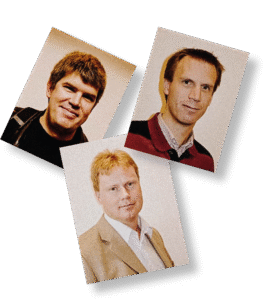 experiences made them an unusually strong trio. When they took the leap, they all came from the same company — but from very different places in life. Staffan had just gotten married, was expecting his first child, and was exhausted from constantly being sent on assignments to Norway without even being able to call home. Mikael had just started his very first job after graduation and simply wanted a more enjoyable employer. Tord, who was Mikael’s manager at the time, had recently become a father himself and spent his days pushing a stroller around Landskrona while thinking about how they would build their new company. Despite their differences, they shared the same vision.
The beginning — and the faxed company name
The early days were far from glamorous. In fact, they did not even have an office at first. They either worked from customer sites or from home, surviving on start-up grants and personal savings. Even finding a company name turned into a challenge. After having several suggestions rejected, the founders sat down one evening with a dictionary, opened it on the letter “E,” and desperately started faxing name ideas to the Swedish Companies Registration Office.
That they eventually ended up with the name Softhouse — after a restaurant in Borås with the same name had gone bankrupt — has since become one of those legendary stories repeated in the hallways. But the real culture was never built around a name. It was built by doing things together for real. When they finally got their very first office on Stormgatan in Malmö, the entire team came together to make it happen.
“We gathered everyone one weekend, bought pizza and beer, and pulled all the network cables ourselves. Then we drove to IKEA, bought furniture, and carried everything back on our own,” Staffan recalls.
Daring to grow — and change direction
The first year, in the middle of the IT boom, went extremely well. To celebrate, the seven employees rented a limousine and drove to Skanör for a traditional goose dinner. But it was during the tougher years following the dot-com crash in 2000 that Softhouse was truly shaped. Thanks to strong customer relationships, the company survived the crisis and soon after made the bold decision to expand beyond Malmö by opening an office in Karlskrona. Trusting local leadership with real responsibility laid the foundation for the strong local culture Softhouse still has today.
Another defining milestone came when the company realized that the industry trend of heavy, overly structured development processes simply was not working. Too much time was spent documenting instead of creating real customer value. So Tord called his former teacher, Anders Sixtensson, who happened to be out golfing and, according to Tord, had grown tired of playing golf. That phone call became the starting point for Softhouse’s agile transformation — a journey that made the company one of the pioneers of agile development in southern Sweden.
A shared sense of pride
When asked when they feel most proud of Softhouse, their answers naturally intertwine. Tord says he feels especially proud when he sees the company’s digital solutions being used in everyday society. Mikael and Staffan both highlight the consistently strong customer satisfaction results. But above all, they are proud of the people.
Both of them especially point to the warmth of seeing the Softhouse culture live on far beyond Sweden’s borders — not least through Himzo Music and his remarkable journey building the office in Bosnia.
The unexpected success in Norway
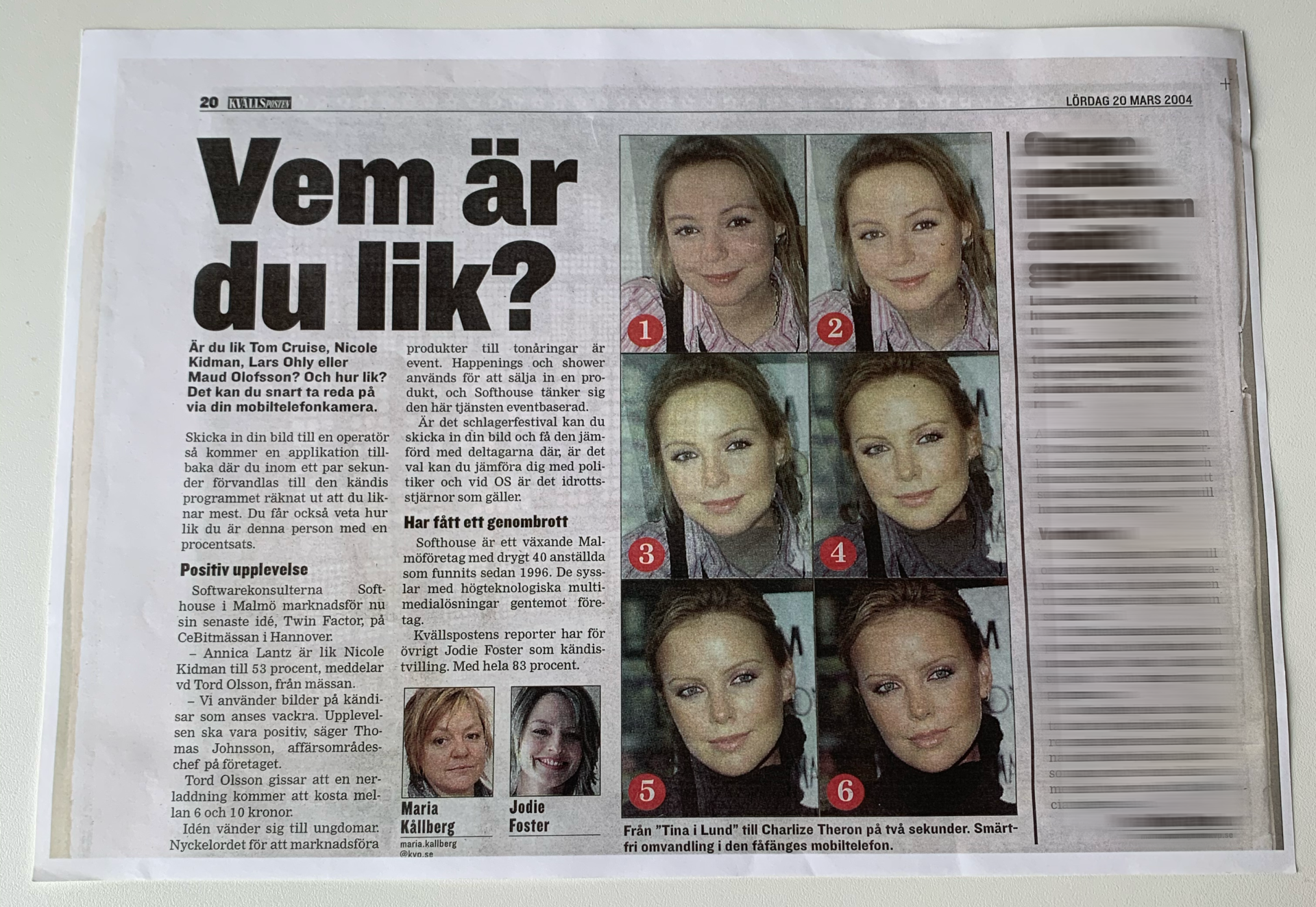
And when it comes to surprises, they all remember the adventure surrounding the facial recognition service “Twin Factor” in the early 2000s. The service launched globally and drew massive crowds at the CeBIT tech fair in Germany. In Norway, it became a huge success with more than 600,000 users.
“One guy spent nearly 8,000 SEK on the service as an icebreaker while trying to pick up girls,” Tord laughs.
The service was shut down shortly before Apple launched the very first iPhone — what could have been the perfect market window. Even so, the experience generated valuable insights that later became the foundation for Softhouse’s investment initiatives.
Transparency creates “boomerangs”
How do you maintain a warm, family-like culture while growing from three friends into a company with hundreds of employees? Tord has a clear answer.
“We have always been very open about everything. No secrets. No hidden agendas,” he says.
That honesty and care are reflected in the many Softhouse “boomerangs” — employees who leave to try something new, only to eventually return. When someone leaves, there are no hard feelings. The door always remains open, which may be the strongest proof of a workplace built on genuine human connection.
From agile pioneers to an AI-driven future
A lot has changed since 1996. Back then, they pulled network cables by hand. Today, everything runs in the cloud. But when the founders talk about the future, they all agree that the company is currently facing the biggest shift in its history.
“Looking ahead, we need to carry our agile heritage with us — but we also need to become an AI company to stay relevant,” Mikael explains. “We are moving fast, because we have to. The world is changing, and so must we.”
Tord shares the same sense of optimism and bold outlook for the future:
“AI is even bigger than the internet. It will not only change information and knowledge — it will fundamentally change what we do and how we do it. This will be an even bigger revolution.”
Tools and technologies will always evolve. We adapt, we learn, and we find smarter ways forward. But no matter how advanced technology becomes, the foundation remains the same as it was back then on that day filled with pizza boxes and network cables: everything starts with people.