The year is 1996. The internet has only just begun finding its way into everyday life, and three colleagues decide to start a software company in Malmö. They wanted to build something of their own — but above all, they wanted to create a workplace where people and genuine care came first. Today, Softhouse turns 30.
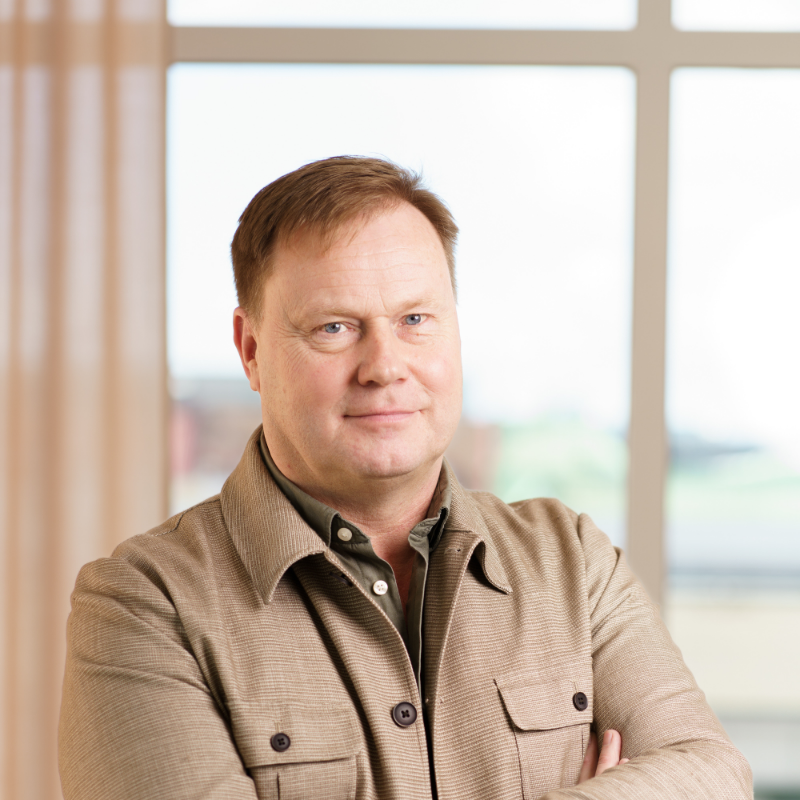
Tord Olsson spends his days walking briskly through Landskrona with a stroller. He is on parental leave with his son for six months, and during those walks, his mind keeps returning to one thing: how they are actually going to shape the business plan for this new company. Together with his colleagues Micke and Staffan, he is about to leave behind the safety of steady employment to build something entirely their own. The three of them had grown close at a previous employer, not least while working on a complex air traffic control project in Singapore. Now, they wanted to create a software company in Malmö where people and care mattered just as much as technology.
“The first years were an incredible amount of work. I was a father of small children, working full-time as a consultant, while spending evenings and nights trying to sell projects and recruit people. Fifteen-hour workdays were pretty common in the beginning,” Tord recalls.
The dictionary, the fax machine, and a restaurant in Borås
The story of how Softhouse got its name is a charming reminder of just how much the world has changed. Back in the 90s, there were no fast digital services to rely on. The founders had already invested in an expensive job advertisement in a major Swedish newspaper, but there was one urgent problem: they still did not have a registered company name. Every single name suggestion had been rejected — including one of their absolute favorites: Softhouse. The reason? A restaurant in the Swedish city of Borås already had that name.
In desperation, Tord called the Swedish Companies Registration Office, where a case handler told them to fax over a long list of alternative names if they wanted any chance of getting the application processed quickly. That same evening, sitting in Staffan’s apartment, they randomly opened a printed dictionary to the letter “E” and started writing down every name idea they could think of. Suggestion number 37 on the list was “Erebus.” It was approved, and the advertisement could finally run.
But after a year or so, they realized the name simply did not work. There had been far too many strange misunderstandings — for example, some people thought bus company Swebus had suddenly gotten a new competitor. So the company launched an internal naming competition to find something that reflected them better. The competition was won by Conny Karlsson — who, by the way, still works at Softhouse today — with the suggestion “Softhouse.” The very same name they had wanted from the beginning. By then, the restaurant in Borås had gone bankrupt, and the name had become available. In 1998, the company could finally change its name to the one that perfectly described what it truly was. As Tord puts it: it was simply meant to be.
Openness creates real value
But what is it that allows a company to survive IT crashes, technological shifts, and grow from just a handful of people into hundreds of employees? Tord Olsson does not need much time to boil it down to one thing: transparency.
We’ve always been very open about everything. No secrets. No hidden agendas, Tord explains. That openness became the very foundation of the company culture. The belief has always been that when people communicate openly and solve problems together, they do not just build stronger teams — they also build much better software. The goal has always been to move faster, smarter, and create solutions that people actually use.
The code behind the bus ride
 And that idea — that the solutions should become part of people’s everyday lives — is what the company is most proud of. In fact, Softhouse’s work has sometimes become more deeply woven into society than people may realize. About 25 years ago, the company developed a voice-controlled system for Skånetrafiken. Tord remembers listening through voice samples for bus stop announcements that Softhouse would later deliver as part of the system. Skånetrafiken ultimately selected one of three proposed voices — a woman with a warm and distinctly “skånsk” accent.
I’m not even sure the original system is still running, Tord says, but that same voice is actually still being used today to announce the next stop on buses and trains across Skåne. Later on, we also had the opportunity to help build the Skånetrafiken mobile app. It is one of many examples of how the company, over the past 30 years, has had the privilege of contributing small — but often meaningful — pieces to society’s digital development.
Facial recognition and a mobile success ahead of its time
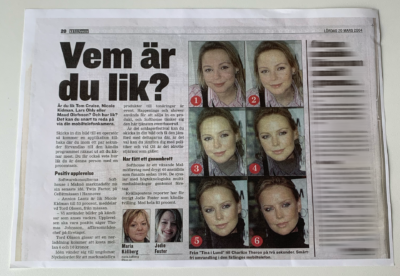
Curiosity about new technology has always been part of the company’s DNA. One thing many people do not know is that Softhouse once built “Twin Factor” — an early mobile service that used facial recognition to tell users which celebrity they most resembled. The service launched across multiple countries and became a major attraction at a large tech fair in Germany, where their small booth generated lines stretching hundreds of meters. In Norway, the service became a massive success with more than 600,000 users. One particular user alone spent nearly 8,000 SEK on the service.
“When we looked closer at it, we realized he must have been using it as an icebreaker to flirt at bars,” Tord laughs.
Despite the Norwegian success — where users had already embraced mobile services thanks to companies like Schibsted — breaking through the noise in other markets proved difficult. Eventually, the service was shut down on New Year’s Eve in 2006. What the team did not know at the time was that Apple would launch the very first iPhone just days later — potentially the perfect platform and market window for the service. Had they held on a little longer and turned it into an app, it might very well have become a global hit. Even so, the journey provided invaluable insights into product development, lessons that later became part of the foundation for the investment company Softhouse Accelerate.
The same drive 30 years later
And Tord? Thirty years later, he is still very much involved in shaping Softhouse. Today, he remains active through board work, business development, and initiatives connected to the portfolio companies within Softhouse Accelerate. More often than not, he is also the person helping handle unexpected, strategic, and sometimes highly complex questions behind the scenes, allowing the organization and its teams to stay focused on what they do best.
The next great leap
Softhouse began its journey during the internet boom. Now, 30 years later, the company finds itself in the middle of yet another major technological shift. Today, the focus is no longer about pulling physical network cables; it is about understanding and harnessing the power of artificial intelligence. And Tord is absolutely convinced about where the world is heading next.
AI is even bigger than the internet. It won’t just change information and knowledge — it will fundamentally change what we do and how we do it. This will be a much bigger revolution. Technology is evolving at breathtaking speed, and the tools are becoming smarter every day. But one thing remains exactly the same as it was back in 1996, when that very first fax was sent: Everything starts with people. We build digital solutions that create real value from the very first line of code to the finished experience. And to every customer, partner, and employee who has been part of the journey so far: thank you. The company is incredibly proud of its first 30 years — and even more curious about what comes next.